Metahumour is one of my favourite forms of comedy, and I thought something worth writing about given its increase in popularity of late, and when it works for me, and when it doesn't. Metahumour, at least in the context I refer to it, is humour based around the acknowledgement of the fiction of the joke.
A great example of this can be found in the 21 Jump Street movie, where the captain character points out that they've resurrected the 'Jump Street program' from the eighties because nobody in the police department has any original ideas anymore. Of course, this is a blatant joke based around the fact that the movie is a remake of an old 80s TV show, something frequently done in Hollywood where there are very few original concepts.
The thing that makes these gags work, and makes me love them so much, is that they can also work within the world of the film (or setting) itself. It's not as obvious as breaking the fourth wall (it doesn't actually establish the world the characters are in as fictional), it just makes a reference that has an additional meaning to the audience.
Sometimes, this can be pushed, and it tends to ruin the joke slightly to me. For example, there's a brilliant joke that gets slightly ruined in the credits of 22 Jump Street (spoilers, obviously, if you haven't seen it) where after a series of fake trailers for the idea the franchise keeps running, Jonah Hill is swapped out for Seth Rogan, referencing the idea of the cast eventually being recast. This is really funny, particularly since the two actors work on similar projects (sometimes the same project), clearly know each other and have similar comedy styles. But the joke then is ruined because they constantly reference how he 'looks different', and have the characters on screen discuss the change subtly (like they think you can't hear). To me, that joke would work a lot better if it played as a real trailer, without heavy referencing to what had actually happened. It'd be more subtle, but frankly it's so obvious anyway subtlety isn't needed.
That's not to say that sometimes breaking the fourth wall can't make something hilarious, it just needs to be done in the right context. One of my favourite movies for the use of metahumour is Black Dynamite, because it's supposed to be a terribly made movie. There's almost two characters played by everybody in that film, the character of the movie, and the actor playing them in this terrible 70s movie. They often break character without becoming the true actors themselves, and it makes it even funnier. Possibly my favourite fourth wall breaking gag of all time comes in that movie, when in one fight scene one of the heroes accidently strikes the gigantic guy he's fighting, and you can see the actor becomes furious. One very dodgy cut later, and the fight continues, but against a completely different extra. Immediately there's a whole story of what happened off camera, and the joke becomes utterly hilarious.
But it's a dangerous weapon, metahumour. It can be funny, but you need it in the right context. In a movie designed to be a bad movie, breaking the fourth wall works. In a comedy where you're expected to at least buy in to the world, it's better to lean on the references. And of course, it's easy to over do it. I'm a massive fan of Doctor Who, but in the last few series there's been a tendency to seriously over-egg the joke of having characters actually ask the Doctor 'Doctor who?' as a question, including having thousands of Daleks chanting 'DOC-TOR WHO!?' over and over again, or having Matt Smith giggle and make somebody ask him it several times because he 'likes the sound of it'. Things like this just don't work. Doctor Who is a comical show, but it also expects you to take its universe seriously, the humour stems from the characters behaving in comical ways and the way the universe can contain anything, not from obvious comedy jokes like this, and not only does it take you out of the experience, but it's not even a funny joke.
So I love metahumour when its done well, but it really does need to be used sparingly, in the right context, and to most crucially of all, actually be funny. I know that seems kind of obvious, but since its one of my favourite comedy styles, I thought it was worth looking at some examples, and, well, I needed something to post!

Thursday, 20 November 2014

Wednesday, 19 November 2014
vs. Tangled vs. Frozen
Somewhat following on from the post below, our eventual Disney costumes made me think about the movies they were based on. Namely, Tangled and Frozen. They're probably the most successful 'classic' Disney films of the 21st Century, in that they resemble the traditional fairy tale retold as an animated musical.
Frozen, certainly, which not only represents a massively successful Disney film, but perhaps the movie with the widest cultural impact of the 21st Century so far. And I'm aware that's probably both shocking and slightly depressing to a lot of people, but not since The Matrix, or perhaps shockingly, even Star Wars in 1977, that there's been a movie with such a wide cultural impact (perhaps there's an argument for The Dark Knight, but that might be a blog for another day). That film is everywhere. Awards ceremonies for live performances, X-Factor song auditions, it's on the radio, it's in every toy shop, there's t-shirts and furniture, internet memes and cosplay and long running jokes and just about everything you can imagine. Of course, having a popular soundtrack helps, but I struggle to think of a film that made it quite so far in to every aspect of the public consciousness.
Being generous, in comparison, the response to Tangled was mostly surprise that it didn't suck. At that point, nobody thought much of the in-house Disney productions, with a long run of average movies under its belt, and its last attempt to return to classical animation in The Princess and the Frog a commercial disappointment, and at least a slight critical one. But it kick started what a lot of people now call the Disney Renaissance (a name also given to the time in the late 80s and early 90s when Disney movies were doing fantastically) in that the recent slew of Disney movies have been considered pretty good films. (That being Tangled, Wreck-It-Ralph, Frozen and now Big Hero 6).
The question here though is, separated from all the hype, which is actually the better movie? Personally, I don't think it's as clear cut as their popularity makes out. And yes, I am aware it's odd to be looking at Disney movies in this level of detail, but this is what married life has done to me.
On the surface, I'd actually go with the crowd on this one. Frozen has an awful lot to like about it. Stepping away from the songs that have had such a large part in making the film famous, as the quality of songs in a film isn't something I personally look at, it's a film with a reasonable solid plot, two strong, likeable female protagonists, some impressive visuals and a nice simple story that children can enjoy but that resonates on a deeper level for those older.
There's an awful lot out there on how you can describe Elsa's powers as a metaphor for everything from discovering your sexuality to representing her first period to being her coming out as gay, and since Frozen probably has more words written on it than the Bible at this point in time, I won't bother to repeat the discussions, apart from to say they are actually all legitimate readings. I see where people are coming from, and that immediately gives the film a deeper resonance with a lot of people. (It also explains why Elsa is such a popular character, despite, in my opinion, being the most boring character in the film, as I'll go on to explain later on).
But on top of that, it has a heroine who is proactive and heroic, but allowed to be goofy and funny. Who tries to do the right thing and who drives the plot, but isn't written to just be a male character played by a female. Anna, who is really the star of the movie, is a great female lead. Everything she shows makes a likeable and yet strong lead character. Strength, of course, not equating to physical ability (Anna's not the best at that stuff, but that makes most people like her more), but more to her drive, her beliefs and how she goes about them. I've argued before, off this blog mainly, that my biggest bug bear with female characters in film and TV is either making them useless and a damsel or making them 'strong' by making them both flawless and physically violent, never to be touched and never to show any flaws. A strong, determined female lead who also can show vulnerability is something I appreciate, and something we definitely see in the lead character.
Tangled, by comparison, seems a lot shallower. The story is actually rife for an adaptation that has deep meaning, a sheltered girl heads out in to the world for the first time, but this film plays it mostly straight. It works as something of a celebration of innocence over cynicism (Rapunzel wins over just about everybody but her evil step mother through her pure naivety, sweetness and innocence while Flynn Rider's cynicism and sarcasm only ever makes things worse), and perhaps you could accomplish a meta-textual reading suggesting that is a defence of Disney's approach to film in general, but it's not really something as in your face as 'Let It Go' is for.. well, whatever you choose to believe it represents.
However, the characterisation is strong in this film too. Rapunzel, easily the archetypical damsel in distress in fairy tales, here is recast as excitable, naïve but capable. Her reason for never leaving her tower isn't because she can't escape it, but because at first she has loyalty to the person she believes is her mother, and then secondly because she doesn't know where to go. Flynn Rider is not her rescuer, but a man black mailed in to being her tour guide. And Flynn, despite being shown to be quick witted, funny and physically capable, quite literally never successfully solves a situation without Rapunzel's help. He never wins a fight, none of his plans ever pan out and he's constantly rescued by Rapunzel herself. If you read a summary of the film, it's easy to imagine Rapunzel in the typical Disney princess role, with Flynn as the heroic lead, but in truth, it's nearly the opposite. And even when Rapunzel is eventually 'kidnapped' at the end (returned to her mother, and even then that's because she hasn't quite worked out she's evil yet, something she does figure out on her own once she's back), so is Flynn, and he needs to be rescued before he can go and rescue her. And when he does... he fails and actually gets killed.
Good work, Prince Charming.
He makes a final heroic sacrifice, of course (cutting off Rapunzel's magic hair), but it's the type of sacrifice you might see the damsel make in a more traditional movie. The roles still feel inverted, despite Flynn's traditionally 'heroic' tendencies (he's the classic quick witted thief). Frozen, of course, also famously inverts Disney stereotypes, with the reveal of the true villain being entirely based on essentially mocking Disney's old 'love at first sight' stereotypes. And it's worth pointing out neither film accepts 'marriage just after having met' as an acceptable ending. Flynn and Rapunzel marry after 'years and years of asking' and Kristoff and Anna only just share their first kiss at the end of the movie.
But Frozen also has drawbacks that I feel Tangled doesn't. Firstly, its humour is worn much more on its sleeve, it's less witty and sarcastic and more earnest and slapstick, and in doing so, there's few laugh out loud moments. Those that do come come from Olaf the Snowman, the traditional comedy sidekick who, unfortunately, also manages to be a little irritating. He's used sparingly and a good example of a decent comedy sidekick, but you can't help but feel he detracts a little from the seriousness of some situations. He gets some genuinely very very funny bits, but his overall presence tends to make the film feel much more childish than it needs to be (and yes, I am aware I'm talking about Disney films).
Tangled also has funny characters, but they're approached in a slightly different way. Most of the comedy comes from Flynn Rider himself, who is of course also one of the leads, and is in the form of wit and sarcasm. It's amusing, often because it references what the audience is thinking, but also fits in to the universe without being quite so distracting. The sword fighting horse that follows him on the other hand is as absurd as it sounds, but since the characters all treat him seriously, it actually works without disruption somewhat better. Early scenes do tend to rely on slapstick a little as well, but they're so brutally harsh on the character (poor Flynn should be very, very dead in the first twenty minutes of this movie) they're not quite standard affairs.
Ultimately though, I end up thinking of characterisation. And while I've praised Anna's characterisation, the rest of the Frozen cast suffer. Kristoff, the love interest, is a hard working nice guy with a level of wit, but he's not exceptionally interesting. And Elsa, as I've said before, is problematic. Character design would have you believe she becomes a liberated, perhaps flirtatious, free spirit, but she's written to remain as stoic, formal and responsible as ever. She never lightens up, not really, and so remains the stiff, responsible older sister in contrast to what they seem to want with the visuals.
Put out of your head for a moment what you know of the film, and look at this image:

That look doesn't fit the character. And the rest just appear bland. In fact, if you compare the DVD covers of the films, you can see the problem.
Frozen gives us:
 Here we have four characters standing around with bland, pleasant smiles, and a funny snowman. It hardly looks like an exciting movie, and shows that these characters don't have much of an edge. Nothing here makes me want to know what's going on with these characters, who they are, or what their stories are.
Tangled gives us:
 There's a girl ready to wield her hair in combat like it's some kind of set of nunchucks or a whip with a confident, aggressive smirk on her face. There's a man wielding a frying pan for some reason, again smirking. And there's an aggressive horse. With a sword in its mouth. This shows three characters (four, if you count Pascal the chameleon) with interesting expressions, tons of character, in what seems to be a bizarre situation.
And I think it shows why I prefer the characters in Tangled.
Ultimately, both are good Disney films, and I'm glad modern Disney is providing decent films for children these days. And I've put far more thought in to these than I ever imagined I would (I blame Kerry and cosplaying the characters), and I'm still not sold on the best. I think I lean towards Tangled for the characters, but they are both legitimately good movies. And if I ever have to think about them in this much detail again, I might just change my mind.
For now though, that's my conclusion. Tomorrow, video games or something to try and restore some of my non-existent credibility.
Frozen, certainly, which not only represents a massively successful Disney film, but perhaps the movie with the widest cultural impact of the 21st Century so far. And I'm aware that's probably both shocking and slightly depressing to a lot of people, but not since The Matrix, or perhaps shockingly, even Star Wars in 1977, that there's been a movie with such a wide cultural impact (perhaps there's an argument for The Dark Knight, but that might be a blog for another day). That film is everywhere. Awards ceremonies for live performances, X-Factor song auditions, it's on the radio, it's in every toy shop, there's t-shirts and furniture, internet memes and cosplay and long running jokes and just about everything you can imagine. Of course, having a popular soundtrack helps, but I struggle to think of a film that made it quite so far in to every aspect of the public consciousness.
Being generous, in comparison, the response to Tangled was mostly surprise that it didn't suck. At that point, nobody thought much of the in-house Disney productions, with a long run of average movies under its belt, and its last attempt to return to classical animation in The Princess and the Frog a commercial disappointment, and at least a slight critical one. But it kick started what a lot of people now call the Disney Renaissance (a name also given to the time in the late 80s and early 90s when Disney movies were doing fantastically) in that the recent slew of Disney movies have been considered pretty good films. (That being Tangled, Wreck-It-Ralph, Frozen and now Big Hero 6).
The question here though is, separated from all the hype, which is actually the better movie? Personally, I don't think it's as clear cut as their popularity makes out. And yes, I am aware it's odd to be looking at Disney movies in this level of detail, but this is what married life has done to me.
On the surface, I'd actually go with the crowd on this one. Frozen has an awful lot to like about it. Stepping away from the songs that have had such a large part in making the film famous, as the quality of songs in a film isn't something I personally look at, it's a film with a reasonable solid plot, two strong, likeable female protagonists, some impressive visuals and a nice simple story that children can enjoy but that resonates on a deeper level for those older.
There's an awful lot out there on how you can describe Elsa's powers as a metaphor for everything from discovering your sexuality to representing her first period to being her coming out as gay, and since Frozen probably has more words written on it than the Bible at this point in time, I won't bother to repeat the discussions, apart from to say they are actually all legitimate readings. I see where people are coming from, and that immediately gives the film a deeper resonance with a lot of people. (It also explains why Elsa is such a popular character, despite, in my opinion, being the most boring character in the film, as I'll go on to explain later on).
But on top of that, it has a heroine who is proactive and heroic, but allowed to be goofy and funny. Who tries to do the right thing and who drives the plot, but isn't written to just be a male character played by a female. Anna, who is really the star of the movie, is a great female lead. Everything she shows makes a likeable and yet strong lead character. Strength, of course, not equating to physical ability (Anna's not the best at that stuff, but that makes most people like her more), but more to her drive, her beliefs and how she goes about them. I've argued before, off this blog mainly, that my biggest bug bear with female characters in film and TV is either making them useless and a damsel or making them 'strong' by making them both flawless and physically violent, never to be touched and never to show any flaws. A strong, determined female lead who also can show vulnerability is something I appreciate, and something we definitely see in the lead character.
Tangled, by comparison, seems a lot shallower. The story is actually rife for an adaptation that has deep meaning, a sheltered girl heads out in to the world for the first time, but this film plays it mostly straight. It works as something of a celebration of innocence over cynicism (Rapunzel wins over just about everybody but her evil step mother through her pure naivety, sweetness and innocence while Flynn Rider's cynicism and sarcasm only ever makes things worse), and perhaps you could accomplish a meta-textual reading suggesting that is a defence of Disney's approach to film in general, but it's not really something as in your face as 'Let It Go' is for.. well, whatever you choose to believe it represents.
However, the characterisation is strong in this film too. Rapunzel, easily the archetypical damsel in distress in fairy tales, here is recast as excitable, naïve but capable. Her reason for never leaving her tower isn't because she can't escape it, but because at first she has loyalty to the person she believes is her mother, and then secondly because she doesn't know where to go. Flynn Rider is not her rescuer, but a man black mailed in to being her tour guide. And Flynn, despite being shown to be quick witted, funny and physically capable, quite literally never successfully solves a situation without Rapunzel's help. He never wins a fight, none of his plans ever pan out and he's constantly rescued by Rapunzel herself. If you read a summary of the film, it's easy to imagine Rapunzel in the typical Disney princess role, with Flynn as the heroic lead, but in truth, it's nearly the opposite. And even when Rapunzel is eventually 'kidnapped' at the end (returned to her mother, and even then that's because she hasn't quite worked out she's evil yet, something she does figure out on her own once she's back), so is Flynn, and he needs to be rescued before he can go and rescue her. And when he does... he fails and actually gets killed.
Good work, Prince Charming.
He makes a final heroic sacrifice, of course (cutting off Rapunzel's magic hair), but it's the type of sacrifice you might see the damsel make in a more traditional movie. The roles still feel inverted, despite Flynn's traditionally 'heroic' tendencies (he's the classic quick witted thief). Frozen, of course, also famously inverts Disney stereotypes, with the reveal of the true villain being entirely based on essentially mocking Disney's old 'love at first sight' stereotypes. And it's worth pointing out neither film accepts 'marriage just after having met' as an acceptable ending. Flynn and Rapunzel marry after 'years and years of asking' and Kristoff and Anna only just share their first kiss at the end of the movie.
But Frozen also has drawbacks that I feel Tangled doesn't. Firstly, its humour is worn much more on its sleeve, it's less witty and sarcastic and more earnest and slapstick, and in doing so, there's few laugh out loud moments. Those that do come come from Olaf the Snowman, the traditional comedy sidekick who, unfortunately, also manages to be a little irritating. He's used sparingly and a good example of a decent comedy sidekick, but you can't help but feel he detracts a little from the seriousness of some situations. He gets some genuinely very very funny bits, but his overall presence tends to make the film feel much more childish than it needs to be (and yes, I am aware I'm talking about Disney films).
Tangled also has funny characters, but they're approached in a slightly different way. Most of the comedy comes from Flynn Rider himself, who is of course also one of the leads, and is in the form of wit and sarcasm. It's amusing, often because it references what the audience is thinking, but also fits in to the universe without being quite so distracting. The sword fighting horse that follows him on the other hand is as absurd as it sounds, but since the characters all treat him seriously, it actually works without disruption somewhat better. Early scenes do tend to rely on slapstick a little as well, but they're so brutally harsh on the character (poor Flynn should be very, very dead in the first twenty minutes of this movie) they're not quite standard affairs.
Ultimately though, I end up thinking of characterisation. And while I've praised Anna's characterisation, the rest of the Frozen cast suffer. Kristoff, the love interest, is a hard working nice guy with a level of wit, but he's not exceptionally interesting. And Elsa, as I've said before, is problematic. Character design would have you believe she becomes a liberated, perhaps flirtatious, free spirit, but she's written to remain as stoic, formal and responsible as ever. She never lightens up, not really, and so remains the stiff, responsible older sister in contrast to what they seem to want with the visuals.
Put out of your head for a moment what you know of the film, and look at this image:
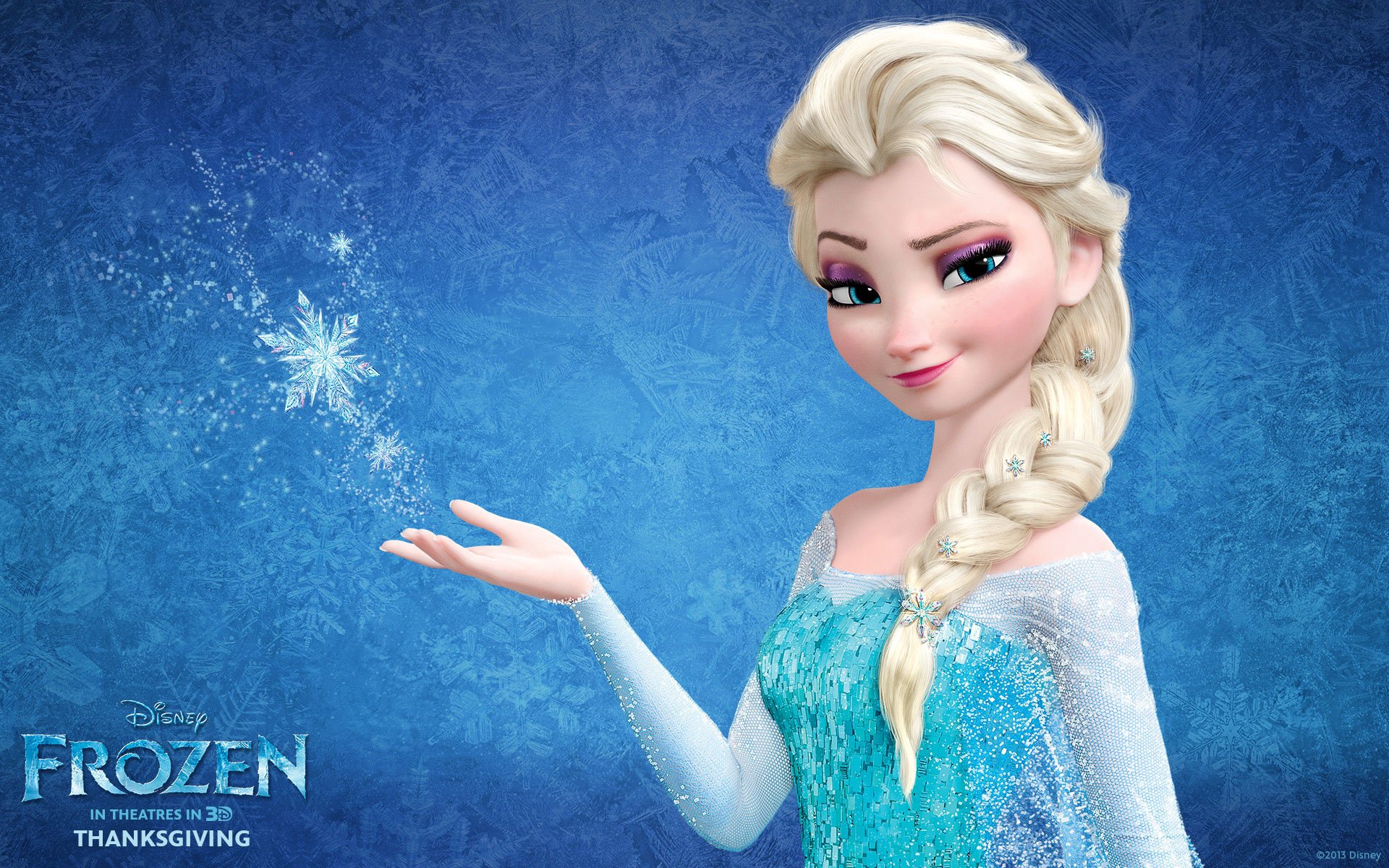
That look doesn't fit the character. And the rest just appear bland. In fact, if you compare the DVD covers of the films, you can see the problem.
Frozen gives us:

Tangled gives us:

And I think it shows why I prefer the characters in Tangled.
Ultimately, both are good Disney films, and I'm glad modern Disney is providing decent films for children these days. And I've put far more thought in to these than I ever imagined I would (I blame Kerry and cosplaying the characters), and I'm still not sold on the best. I think I lean towards Tangled for the characters, but they are both legitimately good movies. And if I ever have to think about them in this much detail again, I might just change my mind.
For now though, that's my conclusion. Tomorrow, video games or something to try and restore some of my non-existent credibility.
Sunday, 16 November 2014
vs. Cosplay
With Kerry (that's my wife, if anybody finds this who doesn't know me) increasingly interested in costuming lately, I've spent a lot of my time thinking about cosplay. Cosplay, for the uninitiated, is the idea of dressing up in costume. Some people would say there's more to it than that, and perhaps there is, which is something I'll be discussing, but that's the essential idea.
The concept of 'cosplay' has grown massively in the last ten years (although not enough yet for Microsoft to recognise it as an official word, or so the red squiggly line on this blog tells me), particularly in geek culture. It's something often seen at the classic comic book conventions, but is spreading further and wider. Part of this is down to the fact conventions are spreading further too, particularly in England which never used to have many, and now there are several per year in most popular cities. Part of it is also probably down to the rise of geek culture in general. These days, geek culture dominates the media, in truth, with superhero movies reigning supreme at the box office and video game releases being major events.
But what makes cosplay 'cosplay', and not simply fancy dress? What's the difference between attending a fancy dress party and being a cosplayer? Apart from sobriety, of course (at least if you're an adult and take to fancy dress parties as I do). That's not such an easy question to answer. On the surface, and I'm sure many costumers would claim, it's down to quality. Traditionally, cosplayers put an awful lot of attention to detail (not to mention money) in to their costumes, moreso than perhaps a lay person would ever consider. I've seen things such as (and these are just a few) across various websites; people debated the exact type of stitch used to hold a jacket together, people becoming excited because they found a run of fabric that was used in the original costume, people trying to replicate an animated costume in period accurate materials and a person thrilled because the screen accurate gloves for his costume 'only' cost £60.00. There's a real sense of pride to costuming for some cosplayers, and getting it as accurately as possible. Particularly if they're replicating a live action costume, as they'll often seek to replicate the exact materials used (or be as close enough), or of course, if possible, buy the original garments (for example, sales of Crombie coats went up when Peter Capaldi was announced to be wearing one for Doctor Who as many people sought to acquire the same coat, even though this particular coat was somewhere in the range of £800). Other times, people attempt to create the costumes from animated shows or movies (anime is particularly popular), where you get a whole range of attempts, from replicated the animated look to making it realistic.
And then you get the people who go the other way, and try to create original costumes. Again, these are usually incredibly detailed, but often based around original concepts or twists. These can vary again, from ideas based on concept art, fan art, or simply original ideas. Steampunk variations on characters are popular, as are Star Wars ones, or perhaps obvious reversals (for example, 'Fire Elsa', the character from Frozen, but as if she had fire powers, seems to be a popular variation).
But does that mean you're not cosplaying if you buy a cheap costume for a character you love? Or if you assemble it from things you find in a charity shop (or thrift store, if you're American)? Or if you just make it out of things you already own for fun? Is that not cosplay? I'd say it obviously is. It seems to be a hobby that can be quite judgemental. There are people out there who make their own costumes from scratch, so look down on those who buy them. There are those that buy the extremely high end ones. There are those that buy mid-range ones that are considered 'cheap'. And there's the aforementioned fancy dress. And everybody has opinions of other people. Particularly in a hobby based around dressing as a character; how do you react when you see somebody else dressed as that character? If they're better than yours, or worse? What do you think and what do you say? It's not a surprise some people get arrogant or snobby about it.
But that all makes it sound like a negative hobby, and from what I've been seeing, it's really not. People come together not only with a love of the characters, but a love of getting to be somebody else. They seem to get quite a lot of abuse throughout both the internet and real life, like cosplaying is the ultimate 'nerd' label, but it's a surprisingly social hobby. People make friends with other costumers, discuss where they got theirs from and how they made them, form groups that work together for similar characters, and generally have a passion for what they do that makes them want to do it often, for parties or for advertising events, and usually that makes them friendly and willing to have fun, as well as make others smile. With Kerry's particular interest, I see this a lot in pages she looks at with Disney cosplayers, who love dressing up and entertaining children. It's a social, friendly hobby. Certainly moreso than sitting in a darkened room playing games.
It's certainly not cheap, however. The 'cheap' cosplay sites (the one I frequented to try and do a costume when I agreed to join in with Kerry was www.cosplaysky.com) still have their costumes usually ranging around the £100 mark (roughly, some much more, some a little less), but this is really considered cheap in this hobby it seems. High end sites seem to sell single garments for closer to £600 (for example, a single coat for part of a costume), and that's without mentioning the popularity of armoured characters, like the Master Chief from Halo or stormtroopers from Star Wars. A lot of people make their own, and the ingenuity they show in doing that can be quite inspiring. I met a Jack Sparrow cosplayer a few weeks ago who showed me his pirate hat was constructed around an old No Fear baseball cap. I had no idea. When I saw him, my first reaction was to assume he had spent an awful lot of money on a high end replica. But instead he'd made the entire costume himself.
And as soon as a child walked near, he snapped back perfectly in to character, and that was that. Clearly people love a chance to be somebody else, it's why we all play video games, and this is another extension of it, but here it's great because it seems to bring joy to other people too.
It's a strange hobby to get your head around, and I'm not sure I understand it entirely myself yet, but I know it does Kerry a world of good getting to pretend to be somebody else, and I'd be lying if I didn't say my brief forays in to it hadn't be an awful lot of fun too.
Friday, 14 November 2014
vs. Agent X
In a break from the norm (the norm being that one post I did the other day), I want to discuss something I've not discussed before. Comic books!
I've always had something of a passing interest in the world of comics without really reading many. I've always found it an expensive endeavour, given that comics are a very brief medium, and thanks to the cost of printing, usually expensive too. However, recently I've been growing to appreciate them more as a visual medium, finding that when one is good, it's somewhat like watching a good film. Sure, it's over faster than a regular book, but it can still be enjoyable.
So I'm going to talk about a reasonably obscure Marvel comic book series I really enjoyed, and one of the older comics I read. It's probably unlikely people who surf the net regularly haven't heard of the character of Deadpool these days, he's probably one of Marvel's most popular characters who hasn't yet been put to film (although that's set to change). In brief, he's Marvel's go-to comedy character, a character that's supposed to be insane to the point he believes he's in a comic book, but with the regenerative powers of Wolverine meaning he's actually quite formidable. With a wacky personality and an actual badass set of abilities, these days he's very popular (although, in my opinion, the humour is so far over done he's far more annoying than likeable in his modern iterations). However, despite his current popularity, he wasn't always like that. Back when he first got his own standalone series, while he had something of a cult following (and in my opinion, the series was the best it's ever been), it wasn't popular enough with sales, and got cancelled when Marvel made the decision that their best selling X-Men related comic books had the letter 'X' in. (Deadpool was considered an X-Men related character as his origin was tied to the same project that created Wolverine, and so fell under the 'X' banner).
Deadpool was apparently killed off in the finale of his own series in a massive explosion, along with a powerful villain with the ability to manipulate minds, and Agent X, the series began, in which a heavily scarred (although not in the same manner as Deadpool) mysterious man showed up, with Deadpool's powers, no memory of who he was and a similar 'wacky' personality. What then followed was a short lived series about a character that was, on paper at least, essentially 'Deadpool with a different name', but as a series turned out to be something a little different.
Without spoiling the end, Agent X was in fact not Deadpool. A key fact that made him actually a much more likeable character. He was never as malicious or cruel as Deadpool was, and while the series sometimes appealed to the same juvenile humour, he was somehow both more mature and yet with a child-like innocence, and certainly more of a traditional 'good guy' (if not hero) than Deadpool ever was.
The result was a series with a sense of humour that remained fun, but had a more likeable lead character. Part of this was down to the writing (initially at least, after the first seven issues, the writers changed, but I'm not counting that). Written by Gail Simone, a comic book writer who has something of a reputation for both being very good and proposing some highly accurate theories about feminism in comic books, she breathed a life in to making these characters and these settings both likeable and funny. (Gail is responsible for coining the phrase 'women in refrigerators', a bizarre phrase outside of the comic book circle, but inside used to refer to the unfortunate habit of killing off female supporting cast members just to give the male characters motivation, named after one of Green Lantern's girlfriends being killed and stuffed in a fridge ; something she was vocally opposed to). She created a good supporting cast (particularly in early stories), and gave the series a real team dynamic of interesting characters who managed to be funny without particularly appealing to the broad 'jump up and down and make them laugh' approach Deadpool often fell in to.
Agent X, the lead character, carried the weight of the comedy, but mainly with a child like attitude mixed with a brutal mercenary toughness and a bizarre set of high class tastes even he didn't understand (all character traits that made sense when you knew who, or what, he was). He was never quite as wacky as Deadpool, and instead seemed to just have a brilliant sense of humour, and often end up in ridiculous situations because of it. He was supported by three main allies. There was Sandi, a very well written female civilian character, who never minded getting involved, was tough and capable in her own right, but a very believable person. She was never a fighter and yet you always believed she'd be involved with these people. There was Outlaw, a very short tempered, super strong cowgirl, who had the humorous role of being cast as the voice of reason and experience a lot of the time despite being utterly inappropriate for it in many ways, making her a great supporting character. (It's easy in comedy to cast a female as the 'straight man' of the group, but what this series seemed to do was have her as a character who sort of thought she should fit in to that role, but in reality, she was just as bad as the others so awful at it). Often emphasised by her losing her temper, or asides from Agent X, often about her behaviour (such as her Western obsession or eating habits). And finally you had the only non-original, non-Deadpool character in the team, Taskmaster. Taskmaster was actually a major Avengers villain for a while, with the power to copy what anybody else did, and often opposed to the heroes. Here, cast as another mercenary, he's basically the jerk, but equally humorous, just in a bitter and sarcastic way.
Taskmaster also gets one of my favourite comedy moments in a comic book ever, when he meets the daughters of two of the campest villains in Marvel's history, his response is:

(Well, I found it funny).
What followed then was a series that was funny, had a true feeling of a band of misfits, perhaps overlooked by the rest of the Marvel universe, and yet managed to avoid falling in to the pitfalls that would later ensnare Deadpool (and yet make him more popular than ever). Unfortunately, however, the character was still essentially a replacement for a character people loved, and mysteriously, putting 'X' in the title didn't magically make it sell better. And so, the series was cancelled after only thirteen issues. They did at least invite Gail Simone back to finish it off, and the ending three issues are pretty great (and see Deadpool return, explain who Agent X is and have the two team up, which actually helps highlight they're nowhere near as similar as people think).
Deadpool went on to return to an ongoing series called Cable and Deadpool, shared with another semi-popular character named Cable, the feeling being that neither character was popular enough for their own series but together they could manage it. (These days Deadpool is so popular that series has been re-released as 'Deadpool and Cable', which probably says it all). Agent X cameo'd a few times, was turned obese (I'm not joking) and forgotten. Outlaw and Sandi stuck around for a little while longer, mainly to get kidnapped (despite one having super strength) and then disappeared when Cable and Deadpool ended.
Agent X never appeared again. And of course, it's likely he never will. Agent X will never get a movie or another series, not while Deadpool is around as a much more popular character, but for a while it was a fantastic, fun little series, and it's a shame that some great writing and character moments didn't get the audience they deserved, and it's still not really spoken of today, despite Deadpool's increased popularity.
I've always had something of a passing interest in the world of comics without really reading many. I've always found it an expensive endeavour, given that comics are a very brief medium, and thanks to the cost of printing, usually expensive too. However, recently I've been growing to appreciate them more as a visual medium, finding that when one is good, it's somewhat like watching a good film. Sure, it's over faster than a regular book, but it can still be enjoyable.
So I'm going to talk about a reasonably obscure Marvel comic book series I really enjoyed, and one of the older comics I read. It's probably unlikely people who surf the net regularly haven't heard of the character of Deadpool these days, he's probably one of Marvel's most popular characters who hasn't yet been put to film (although that's set to change). In brief, he's Marvel's go-to comedy character, a character that's supposed to be insane to the point he believes he's in a comic book, but with the regenerative powers of Wolverine meaning he's actually quite formidable. With a wacky personality and an actual badass set of abilities, these days he's very popular (although, in my opinion, the humour is so far over done he's far more annoying than likeable in his modern iterations). However, despite his current popularity, he wasn't always like that. Back when he first got his own standalone series, while he had something of a cult following (and in my opinion, the series was the best it's ever been), it wasn't popular enough with sales, and got cancelled when Marvel made the decision that their best selling X-Men related comic books had the letter 'X' in. (Deadpool was considered an X-Men related character as his origin was tied to the same project that created Wolverine, and so fell under the 'X' banner).
Deadpool was apparently killed off in the finale of his own series in a massive explosion, along with a powerful villain with the ability to manipulate minds, and Agent X, the series began, in which a heavily scarred (although not in the same manner as Deadpool) mysterious man showed up, with Deadpool's powers, no memory of who he was and a similar 'wacky' personality. What then followed was a short lived series about a character that was, on paper at least, essentially 'Deadpool with a different name', but as a series turned out to be something a little different.
Without spoiling the end, Agent X was in fact not Deadpool. A key fact that made him actually a much more likeable character. He was never as malicious or cruel as Deadpool was, and while the series sometimes appealed to the same juvenile humour, he was somehow both more mature and yet with a child-like innocence, and certainly more of a traditional 'good guy' (if not hero) than Deadpool ever was.
The result was a series with a sense of humour that remained fun, but had a more likeable lead character. Part of this was down to the writing (initially at least, after the first seven issues, the writers changed, but I'm not counting that). Written by Gail Simone, a comic book writer who has something of a reputation for both being very good and proposing some highly accurate theories about feminism in comic books, she breathed a life in to making these characters and these settings both likeable and funny. (Gail is responsible for coining the phrase 'women in refrigerators', a bizarre phrase outside of the comic book circle, but inside used to refer to the unfortunate habit of killing off female supporting cast members just to give the male characters motivation, named after one of Green Lantern's girlfriends being killed and stuffed in a fridge ; something she was vocally opposed to). She created a good supporting cast (particularly in early stories), and gave the series a real team dynamic of interesting characters who managed to be funny without particularly appealing to the broad 'jump up and down and make them laugh' approach Deadpool often fell in to.
Agent X, the lead character, carried the weight of the comedy, but mainly with a child like attitude mixed with a brutal mercenary toughness and a bizarre set of high class tastes even he didn't understand (all character traits that made sense when you knew who, or what, he was). He was never quite as wacky as Deadpool, and instead seemed to just have a brilliant sense of humour, and often end up in ridiculous situations because of it. He was supported by three main allies. There was Sandi, a very well written female civilian character, who never minded getting involved, was tough and capable in her own right, but a very believable person. She was never a fighter and yet you always believed she'd be involved with these people. There was Outlaw, a very short tempered, super strong cowgirl, who had the humorous role of being cast as the voice of reason and experience a lot of the time despite being utterly inappropriate for it in many ways, making her a great supporting character. (It's easy in comedy to cast a female as the 'straight man' of the group, but what this series seemed to do was have her as a character who sort of thought she should fit in to that role, but in reality, she was just as bad as the others so awful at it). Often emphasised by her losing her temper, or asides from Agent X, often about her behaviour (such as her Western obsession or eating habits). And finally you had the only non-original, non-Deadpool character in the team, Taskmaster. Taskmaster was actually a major Avengers villain for a while, with the power to copy what anybody else did, and often opposed to the heroes. Here, cast as another mercenary, he's basically the jerk, but equally humorous, just in a bitter and sarcastic way.
Taskmaster also gets one of my favourite comedy moments in a comic book ever, when he meets the daughters of two of the campest villains in Marvel's history, his response is:
(Well, I found it funny).
What followed then was a series that was funny, had a true feeling of a band of misfits, perhaps overlooked by the rest of the Marvel universe, and yet managed to avoid falling in to the pitfalls that would later ensnare Deadpool (and yet make him more popular than ever). Unfortunately, however, the character was still essentially a replacement for a character people loved, and mysteriously, putting 'X' in the title didn't magically make it sell better. And so, the series was cancelled after only thirteen issues. They did at least invite Gail Simone back to finish it off, and the ending three issues are pretty great (and see Deadpool return, explain who Agent X is and have the two team up, which actually helps highlight they're nowhere near as similar as people think).
Deadpool went on to return to an ongoing series called Cable and Deadpool, shared with another semi-popular character named Cable, the feeling being that neither character was popular enough for their own series but together they could manage it. (These days Deadpool is so popular that series has been re-released as 'Deadpool and Cable', which probably says it all). Agent X cameo'd a few times, was turned obese (I'm not joking) and forgotten. Outlaw and Sandi stuck around for a little while longer, mainly to get kidnapped (despite one having super strength) and then disappeared when Cable and Deadpool ended.
Agent X never appeared again. And of course, it's likely he never will. Agent X will never get a movie or another series, not while Deadpool is around as a much more popular character, but for a while it was a fantastic, fun little series, and it's a shame that some great writing and character moments didn't get the audience they deserved, and it's still not really spoken of today, despite Deadpool's increased popularity.
Thursday, 13 November 2014
vs. The Flash
It's been a while, but I've decided it's time to revive this blog and to continue my experience in reviewing things. If any long time readers (all four of them) remain, they'll notice that I've deleted the older, non-review posts, mainly because I want to focus on reviews.
So to begin with, I'm going to discuss a new TV show that I've been watching. Released to a lot of buzz this year, The Flash is a superhero TV show from the DC stable. DC have really been struggling in films lately to match what Marvel have done with their shared universe and their continued success rate, but somewhere where DC has been finding quiet success is in the world of TV shows. Arrow, a show that started off as perhaps a very traditional, very American adventure show has grown in to one of the strongest on screen comic book adaptations around, and The Flash is spinning off from that show, set in the same universe, but trying something a little different.
Arrow is a very easy show to describe. Particularly when you sit down and watch the early episodes, the scene leading to its origin is easy to see. Somewhere, a group of television executives met, thrilled by the recent success of the Dark Knight movies, and desperate to find a way to cash in on that success. Suddenly, one of them pipes up that they still have the television rights to the Green Arrow, left over from his appearances in Smallville, who's a billionaire who lives in a mansion and dresses up to fight crime using his fortune while operating out of an underground lair. And so, the Dark Knight: The TV Series is born, except instead of Batman, it stars 'The Arrow', a masked (eventually) crime fighter.
And at first it started out wearing its Dark Knight influences so on its sleeve that the show really suffered. It essentially played out like the recent Nolan Batman movies, but with even more scenes reminding us how rich the hero was, and how totally difficult being a billionaire was. Suffice to say, sympathies weren't really with him. But then, about half way through the first series, supervillains began to turn up, plots to destroy the city began happening, and things began to evolve as the show grew in to a real superhero show. It was a slow build, with Arrow himself not even donning a mask until a good few episodes in to series two (up until then, he best method to hide his identity was 'look at the floor and wear a hood if they know me'), but the show soon transcended its 'trying to be Batman' routes and grew to be a really good superhero adaptation in its own right. However, as you might expect for a show starring a powerless man who dresses up to fight crime, it remained relatively grounded. There were superpowered villains in series two, but their appearance was always justified and nothing too outlandish. So, for the more surreal, out there comic book stuff, we got The Flash.
And it's a very mixed bag. For those who aren't familiar with him, The Flash is the 'Fastest Man Alive'. Of course, this particular superpower exists across pretty much all superhero franchises, from Quiksilver in the X-Men and Avengers (and making a show stopping appearance in the recent Days of Future Past) to Dash in The Incredibles. So it's nothing original, but a chance for the creators of Arrow to really explore the more outlandish aspects of the DC universe.
The show starts very earnestly, with Barry Allen (the titular hero once he gets his powers) getting struck by lightning when a Big Science Experiment goes wrong (shocking, I know). He wakes up after nine months in a coma to discover he can move super fast. The only problem is that the Big Science Experiment caused a massive storm that's given lots of other people thematic-to-their-personality superpowers too, and Barry is the only one who can stop them! Because apparently nobody else who got caught in this storm has any kind of moral centre at all. They're all completely evil.
And so, Barry becomes The Flash, aided by a group of fairly generic scientist characters (although the wheelchair bound leader gets some fairly sinister twists and turns). The problem is that the show feels incredibly rushed to get to the superheroing. While Arrow very slowly built up its world, its allies, and how it worked, here Barry awakes from a coma surrounded by a group of people, scientists who are a team who will help him, and yes, they even have a suit they prepared earlier. It all feels very identikit. "Ah, good, Barry, you're awake, I'm your grumpy mentor, this is your love interest, and over there is the annoying geeky side kick, now get to work." All that natural development in Arrow is gone (and it really was natural, one of Arrow's key characters was only meant to appear in one episode, but worked so well they kept bringing her back until now she's one of the main characters in the show) and instead we're dumped with a cast we know nothing about that are instantly formed in to a team.
To make matters worse, the chance to go 'outlandish' is instead used to go 'cheesy'. And often without the special effects to back it up. In the first three episodes, where the UK is at the time of writing, we've had villains who can control the weather, multiply themselves, and turn in to gas. It's all done without subtly, the villains don't have any particular character, and I find myself painfully reminded of superhero 'fights' from that era where superhero films just couldn't get it right. These episodes play out like the battles against the generic henchmen in Ghost Rider. It's not a good thing.
'Cheesy' tends to be the optimum word. Barry narrates things in a cheerful, optimistic tone that feels like a Sam Raimi Spider-man movie without any of the self awareness, and it's difficult to shake the feeling that an episode will end with Barry saving the day with the power of friendship at the rate things are going.
But it isn't all bad. Outside of his pre-assembled science team, Barry has some interesting relationships. His adoptive father is a police captain, and Barry himself is a forensic scientist. This helps him be involved in the weekly plots, and it's nice that he has a serious job. And his wheelchair bound mentor is revealed very early on to have some very sinister secrets that are particularly interesting, and make for compelling viewing.
Yet at the moment, the show needs to develop some serious storylines and move past 'generic villain of the week'. It needs a plot arc and it needs to allow some characters to develop. Cheesy is okay, fun is good, we don't all want dark and gritty, but characters still need to be three dimensional and plots earned, not just created instantly. While Arrow stumbled out of the gate due to being too inspired by the Dark Knight, and perhaps being too generic and focusing on the wrong things, The Flash feels like it's moving too fast and not taking its time to earn what it has. And in doing so, we're not developing any attachment, or worse, any interest, in where things are going.
In other words, the fastest man alive needs to slow down a bit.
Thursday, 7 April 2011
vs. Dragon Age
The recent trend in video games, or at least, those ones considered really good, tend to be to make epic cinematic adventures, and for some reason, try as I might, I haven't really been able to get into them. When I talk about these games, I mean games like Uncharted 2, that are meant to represent everything great about modern gaming, but it's only when I was playing (and finally completed) Dragon Age: Origins (that's the old one) that I realised why.
Dragon Age: Origins is one of those games that's all about your decisions. It's not a carefully scripted cinematic experience, because everything you do can make the game run off in a different direction. It's also ridiculously long. When a game is nearly fifty hours long, not every minute of it is going to be brilliantly written and directed. So there are some stupid, hammy moments in it. But you actually feel like what your character is saying matters, because you never know how it'll come back to haunt you. And it's not always obvious either, some decisions I made really screwed my character over later in the game, even though I had thought they were for the best.
But the reason I really liked it was because I seemed to end up filling in some of the blanks myself. And I think that's why I don't like these great cinematic games. There's nothing for my imagination to do. The game does it all for me. I think the moment I realised the type of game I liked was in Dragon Age when a pivitol moment from my character's past came back to be confronted by me. This felt more personal to me, because it's a game that lets you choose background stories for your character, and then you have to play through those background stories. So for the first six hours of the game, your experience is pretty unique to which gender, race, class and background you pick. This means you could play through the game multiple times, and find it different each time, but to do that, you'd have to have a heck of a lot of time on your hands...
...but what it does mean is that certain situations and settings have special meaning to you as a player and you become more attached to your character, provided you let yourself. I experimented with quite a few of the origin stories, and ended up settling for quite an unusual one. My character was a female slum dwelling elvish rogue. A bit of an odd choice for me, I admit, but I became attached to her after the introductory story placed me in a position I'd never really experienced in a video game. All the other characters start out with weapons, or spells, or abilities of some kind. Many are even nobles, feared and powerful, set up for a fall during their introduction. My elf girl had none of this. She didn't even have a weapon, or any combat techniques. She was, however, getting married, to somebody she'd never met. During the marriage, a human noble (humans are twats in the Dragon Age universe it seems) showed up, kidnapped all the women from the wedding, including my character, to rape them. I have to admit, I've never had my main character threatened with rape in a video game before...
And the real interesting part was when I realised I couldn't defend myself. I didn't at this point have any techniques or weapons, and I knew the game well enough from my other origin story experiments to know an unarmed rogue couldn't defeat the four armed guards that had captured my character, even though the dialogue options were leading towards a fight. I can't readily think of another video game experience like it, that turns your character, especially when it's a freeform RPG, and your character is supposed to be your ultimate hero, into a literal damsel in distress. Of course, my character did get rescued, rather than it be a very short game, and I got to kill the enemy responsible. Unfortunately, the heroic rescuer, the husband-to-be of my main character, got killed in the progress. I'm pretty certain you can avoid that happening, but I just went with it.
And then, way later on, after I'd ventured around the entire world, united four armies under me, and was ready to win over the rulers of the land to let me save the world from an evil army of deadly orc-things, my team met the father of the noble who had done all that at the start. No matter how you play it, he's a villainous character, but I realised, to me, he had more of an impact, because he was technically responsible for everything bad that happened to my character (after murdering a noble's son, my character got arrested and press-ganged into a secret order that started all this to avoid execution). And I found myself picking dialogue choices against him that I knew weren't beneficial for my quest. I knew it wouldn't help me get a reward, I knew it wouldn't help me complete the quest I was on, and I knew it'd actually probably make it harder for me to achieve my goals. It didn't even match up to my usual play style, which given the options I usually picked, my rogue was apparently the nicest, wussiest rogue ever. She always tried to avoid a fight and always tried to do the right thing. Except here, I picked all the dialogue options that tried to start a fight, making threats and trying to attack him in a big courtroom full of important people.
Why? Because I saw it as something my character would do. Despite her usually nice nature, I had a good idea in my head of the type of person my character was, the way she'd respond to this man, and the fact that she'd want to kill him. It even worked into a character arc for her, as if over the course of the story she'd grown from a bit of a coward, scared of a confrontation, into more of an altruistic hero, trying to avoid a fight if neccesary, and now into somebody finally letting her anger and developed fighting abilities get the better of her. And I imposed all that myself. It's not there, in the game, told to me. I filled in the blanks and made up my character's motivations and story to fit into the game. Basically, my imagination filled in the blanks. And that's what I think I like. When I can imagine more is going on than the game presents. When it's too slick, too cinematic, too much like a film, I loose interest because the character doesn't feel like my own.
I don't mean doesn't feel like me, I mean, unless I'm a female elf and nobody's told me (Boote, shut up). I just mean, I feel like I'm playing as somebody elses character. Nathan Drake doesn't feel like he belongs to me, I feel like his every thought and action has already been decided by somebody else. In contrast, say, Link from the Legend of Zelda, I do feel belongs to me, because I can impose my impression of what his thoughts are, because he's silent, even though he's a fully developed character in terms of design. It's even moreso when I created the character. I feel that the character is mine to define. By the end of the game, I had a fully developed personality in my head for that character, and it'd all developed just for me over the course of the game.
And that doesn't mean things worked out for her. My character survived the ending of Dragon Age, but not through choice. My choices had some pretty severe impacts on my adventuring party. One tried to kill my main character (I suppose that teaches me for not using him enough), another abandoned me after I turned down a sinister sounding deal with her, and a third died. These weren't outcomes I wanted, because I knew I was going to go on and play the sequel, where I wanted the characters from the old game to still be around, but they happened because of the character I'd made my little creation in to.
Of course, I could have cheated and gone back and revised those decisions, but again, that'd of defeated the point. Then, at the end of the game, I had my character turn down all the rewards she got offered, because I imagined she just wanted to run away (and the game gave me that choice too, to 'travel for a bit') given how much she'd lost. Which was again, not neccesarily what I wanted, as I thought it'd be funny to set my character up as some kind of ruler for Dragon Age 2, when my new characters would then have to be aware my old one ruled the land or something, but it fitted in character, so I did that instead.
And that's why I liked it. I like the kind of games where you can fill in the blanks. Maybe it's why I like DS games so much. They're not slick enough yet to make everything preset. I hope that as games develop, we'll still get experiences like that one, rather than they become increasingly cinematic. Sadly, Dragon Age 2 looks like it's gone that way already, with only one character for you to play as, with a full voice and personality, so I won't be able to invent my own character.
Which sucks.
Wednesday, 3 November 2010
vs. Predators

From the moment I first planned to watch this film, I knew that I'd have to do a review on my blog, just to get one step closer to having that long searched for 'vs. Predator' blog title. And that in itself made me curious. Would I like it or hate it? Would it be a review saying how things finally picked up for the Predator franchise, or how they crashed and burned like the AVP series? Interestingly, it's neither, mostly because it's saved by a strong start and it led me to realise something...
The original Predator movie is one my favourite films, which is unusual for me, since it's mostly seen as a big dumb action movie, and as someone who reads way too much into films, I'm not meant to like big dumb action movies. But I love it for a couple of reasons. I think the actual Predator creature is one of the best realised humanoid aliens in cinematic history. One of the key moments in watching films as a kid, and something that made me so obsessed with them, was seeing the Predator unmask in the original film for the first time. I remember thinking 'there's no way it'll look as alien as it should' (yes, I was jaded when it came to films even as a kid), and then was really impressed when there was this lizardy mandibled monster that actually looked convincingly alien. And then it impressed me again in Predator 2 where they, for once, managed to make a creature that was obviously the same species, but convincingly looked like a different person. Not just another gathering of aliens that all looked identical.
But I also loved the way the plot worked. It was clever. It almost works as a subversion of a big dumb action movie. It starts like one, with its own plot and characters (more on that later), but then they get interrupted by something else, and it all goes off the rails and gets very interesting. It also manages to be hilarious at the same time. 'I ain't got time to bleed' has to be one of the worse, and therefore best, macho one liners ever.
I also love Predator 2. But that's a film that has a terrible reputation, and might actually warrant a 'vs. Predator 2' blog one day. Which would at least be a pretty awesome title for a blog.
But unfortunately, both those films are pretty old, and anything that's attempted to capture the Predator as a film concept since has failed miserably. So I started off surprised when Predators started off strongly. Flung into the story in one of the best cold openings I can think of, we join our 'hero' (inverted commas needed for this guy, trust me) plummeting through the sky in free-fall. He's pretty freaked out, and seems to have no idea why he's there. He discovers an alien parachute strapped to him, manages to activate it, and lands, with no clue who 'threw him out of a fucking plane'. He's then joined by various others plummeting out of the sky in the same manner, all complete strangers, and they set about finding why they're there.
They're even a nicely diverse bunch, from all over the planet, so for once they aren't all Americans. That's nice, even if them all speaking English is a stretch. (I suppose you could assume the Predators picked prey that they knew could communicate with each other to make for a better challenge, so I can accept that). And actually, although this section of the film has some oddities (a doctor recognises a plant....on the alien planet) and it commits one of my cardinal action movie sins, for the most part, it's fairly efficient.
For those of you interested, if you're still managing to read this, that cardinal sin is introducing a female character we're told is very strong, independent and dangerous, and then repeatedly making her the incompetent one. In this case, we're introduced to an Israeli sniper who actually seems to be the real hero of the piece (Adrian Brody's character, although written as the hero, is far too self centred and selfish to be considered the hero). The only one with any morales, she's also meant to be one of the 'deadly predators' that were picked for the actual Predators' sport, but in the first part of the movie needs rescuing twice before any Predators even show up. While all the other male characters, even the unarmed ones, obviously handle these threats with no problem. I hate that kind of 'fake feminism' (as I call it). So it loses a point for that.
Other than that, and a few very sketchy infodumps ('this planet is a game preserve, and we're the game' says the main character... having deduced this because an alien dog attacked him... and then the aforementioned Israeli sniper tells everybody about the events of the original Predator, because a top secret US Government mission gone wrong is the type of thing they tell Israel), the opening is strong. There's some nice moments of mystery, the characters are hunted and stalked, and there's a real sense of a story happening.
And then the film begins to fall apart. The characters decide to set up various traps and wait for the Predators to come (they're all very accepting of being hunted by aliens, by the way), and apparently the only reason they have for doing this is because it was a scene from the first movie. Here, it makes no sense. They've already found the corpse of somebody who tried differently, and got a lot closer to the group of Predators (for there's more than one) than most people ever do in these films, but still think they're primitive traps might work. Of course, they don't. And that's where things go really wrong.
Laurence Fishburne turns up as a survivor of this world for what's implied to be years, driven insane and living off scrounged technology. He takes the heroes to his home, on a giant crashed spaceship. Apparently, the Predators never thought to look there for him. In fact, if the Predators parachute their prey in, why is there a crashed spaceship there? Anyway, regardless, things really begin to fall apart plot wise here, and it's not just because we question things like random spaceships. At least Laurence Fishburne is an acceptable source of info dump, as he tells us the Predators pick these people not only for good sport, but to advance their hunting techniques. They return each 'season' with newer, deadlier weapons and techniques. This is the first stumbling block for this movie, since it follows the set pieces of Predator so closely that it means there are no new weapons or techniques for the Predators, completely destroying this plot piece. They don't even use any of the interesting or cool gadgets introduced in Predator 2, since this film seems to ignore that, making them seem dull in comparison.
We're also told there's some sort of feud going down between the new redesigned Predators, and 'smaller' ones, which are the originals (the earlier mentioned mystery is why one of these is imprisoned in the Predators' camp). Not only does this disregard the original movies and the power of the enemies by telling us these new ones are bigger and more powerful (despite technically being shorter; they come in at about 6"7 whereas the original Predator was over seven foot), but it's another case of the film telling not showing. If these are meant to be 'Super Predators' or whatever, they fail to perform spectacularly. Not only do their reduced height and bigger helmets make them vaguely reminiscent of the old 'big head mode' on a video game, they fail to perform as deadly hunters. One is blown up when it stupidly grabs a man armed with explosives, and another is killed in a sword fight (itself ripping off a scene almost shot for shot from the original Predator, before rather than cutting away as the original did, actually showing us the sword fight; it looks about as silly as I always thought it would). But whereas the original films (both include a scene where somebody challenges the Predator to a sword fight and is then killed off screen) were sensible enough to show the Predator winning these confrontations (and both times making the badass swordsmen scream in horror off screen) in this case, the Predator actually loses. And the whole scene, again, only seems to have been put there to 'quote' the moment from the original film.
This would almost work if when later on in the film, the original style Predator escapes, and challenges the surviving new Predator to a scrap. As a 'return of the original badass' moment, this could have really worked, as the old school monster everybody watching this is a fan of kills the new one, and then becomes the real threat. Sadly, their fight is reduced to grabbing each other in man hugs, and, as Carl put it, Swilly head butts, and the classic Predator actually dies making the entire thing pointless. We do get to see the new Predator unmasked however. It looks terrible. As someone who loves the original, as I said before, something I found to be a believable yet horrific alien, this new one is just a case of overdoing everything to make it 'scary'. It even has red eyes!
 It kinda looks like a rubbish Cthuthlu, but not a Predator...
After that, there's a fairly well executed plot twist for one of the characters, the girl needs rescuing again, and the hero defeats the last surviving Predator with an axe he got from nowhere. Then they're stranded on the planet with nowhere to go, so the movie ends. Yet despite all these flaws, they're not the biggest problem with the movie. It took me a while to realise what was wrong with it, despite Kerry's constant complaints of 'nothing happened', before I realised this actually was the problem.
By that, I don't mean that nothing happened in a movie cram full of set pieces, but moreover, the characters had no plot or motivation beyond what the Predators were doing. One of the great things about both the older Predator films was that they're both actually set up like different types of movies that the Predator is attracted in to. Predator is a cheesy Arnie movie like Commando or something, with characters on a mission that's not quite what it seems, a 'it's a conspiracy' plot twist, a government official you can't trust, and so on into which something new and fearsome is drawn. Predator 2 is a hardboiled cop movie with a 'too old for this shit' cop tackling gang warfare and his interfering bosses into which, again, something new comes. Both movies are like movies on their own that the Predator turns up in. The characters have plot lines, motivations and things to do outside of the attacks of the Predator, and slowly, the Predator takes over the storyline. Both films would make average action movies without the Predator (especially the original, with the awesome 'attack on the enemy camp' scene, complete with moments like pinning somebody to a wall with a machete, and delivering the line 'stick around'). In comparison, Predators is just the 'Predator' part of these films, with none of the set up to pull us into the world, or to make the appearance of the Predator interesting. And that's why it runs out of steam and the film feels like nothing really happened.
In fact, maybe that's the way to go with the franchise. To make films that work as films on their own, then throw a Predator in there. The possibilities are endless! What about a classic teen slasher flick, but the violence attracts something new and even more powerful? And suddenly, the hunted and hunter are hunted by something even worse. Or what about a powerful mob drama set in the 1930s, when suddenly something completely inexplicable and unstoppable shows up? In fact, why stop there? Why not any type of movie? Zombie apocalypse? The dead walk, man kind if pushed to the brink of extinction, every day is a battle as the planet boils... and then there's something else that can't resist that environment...
That's how you do a Predator movie! Quite literally, tagging 'vs. Predator' on to the end of random movies will net you a better Predator film than attempting to make it 'stand alone'. After all, the original Predator is little more than 'Commando vs. Predator', and really, Predator 2 is pretty much 'Lethal Weapon vs. Predator' with the comedy removed. Compared to that, 'Predator vs. More Predator' was always going to be a bit shit.
Subscribe to:
Posts (Atom)